Tuesday, April 24, 2012

Our lives with pterosaurs, part 1


Not many mornings ago the lovely Georgia Maclean-Henry and I were discussing the the topic of 21st century pterosaurs. Not, you understand, as a discussion of whether the reports of late-surviving, cryptid pterosaurs are genuine (they almost certainly aren’t, for reasons discussed in Darren Naish’s assassination of this idea), but a hypothetical premise that pterosaurs were commonplace components of our modern fauna, and what they would be like to live with. Though obviously speculative and completely juvenile, I thought this may be fun to blog on and discuss with others, so feel free to chime in at the end of the post with your own ideas. Who knows, we may even learn something in the process. (Image, above, shows what we're all now thinking).

Before we get going, though, some ground rules. Aside from the fact that we’re ignoring pterosaur extinction in this discussion, we’re basing everything else on fact as much as possible. For instance, we’re not ignoring the extinctions of specific pterosaur groups: if they went extinct before the terminal Cretaceous (when pterosaurs as a whole got the evolutionary chop), then they can’t exist in the modern day. Pterosaurs are also the only animals we’re hauling into the Modern: the biosphere is otherwise exactly as it is now, so there are no tyrannosaurs or anything running around as well. Also, the goal here is to consider pterosaurs as real animals, not hyper-aggressive movie monsters, so we don’t need to pay any attention to their Modern interactions with people in virtually all Silver Screen outings (which invariably boil down to said people being attacked and/or eaten) and start with a clean slate of ideas. Got that? On we go, then.

UPDATE: 24/04/12
Just one last rule, following on Mike Taylor's comment, below. I'm also focusing on pterosaurs as we know them in the fossil record, not as we may twist them through selective breeding or other genetic tampering. I guess this is an exercise in simply crashing pterosaurs into the Recent, considering what basic pterosaur palaeobiology would lend itself to in our modern world.

Roll call
The first part of this exercise, of course, is to determine what pterosaurs we would have running around today. Which lineages were present at the end of the Cretaceous that could, potentially, have survived until Recent times? Because pterosaur fossils are found within spitting distance, geologically speaking, of Tertiary rocks we assume that the last of their kind died out in the same mass extinction event that ruined the weekends for 75 per cent of life 65 Ma (Buffetaut et al. 1996), but the majority of pterosaur types were not witness to this event. Pterosaur faunas of the uppermost Cretaceous are almost entirely dominated by azhdarchids, the often gigantic, toothless and long-necked forms made famous by the likes of Quetzalcoatlus and Hatzegopteryx (see sketch, above, for a general guide to their appearance). These famous genera, incidentally, are some of the last pterosaurs we find in the fossil record, so giant pterosaurs are very much in for our consideration here. An incomplete nyctosaur humerus (if you’re not familiar with nyctosaurs, think Pteranodon, but weirder) from Mexico is the only record of non-azhdarchid pterosaurs in Maastrichtian strata (that is, name of the time interval representing the last 5 million years of the Cretaceous, 70-65 Ma), compared to literally dozens of azhdarchid occurrences (Price 1953). The pterosaur fossil record is noted for its incompleteness and preservational biases (Butler et al. 2009), but their reduced diversity at the end of the Cretaceous may not be an artifact of the fossil record as the number of pterosaur-bearing rock units at this time is relatively high, but diversity remains low. In short, then, while we may be able to identify dozens of different pterosaur groups across their evolutionary history, it seems that only the azhdarchids and nyctosaurs would have any hope of meeting us in the modern. (Image, below, shows a phylogenetic tree of pterosaurs using the major clades of Lü et al. [2010] mapped across time. The squiggly line shows the number of pterosaur-bearing rock units throughout the Mesozoic [borrowed from Butler et al. 2009] From my book).

With 65 million years separating us from the last pterosaurs, it is not unreasonable to assume that they may have developed into rather different forms by the time modern man appeared. Or would they? Evolutionary stasis spanning 9 – 10 Ma has recently been proposed for several non-pterodactyloid pterosaur clades (Lü et al. 2012) and, although admittedly suggested by rather fragmentary remains, several pterodactyloid lineages also do not appear to change dramatically over longer time frames. This may be true for azhdarchids as much as anything else: a vertebra representing the oldest known azhdarchid is known from Berriasian rocks of Romania (140 Ma) (Dyke et al. 2010) and looks, so far as I can see, no different from the vertebrae of Maastrichtian forms. Note that azhdarchid necks are very derived compared to those of other pterosaurs, so this comparison of their cervical anatomy suggests that the group was already fairly ‘evolved’ very early on in the Cretaceous. Maybe, then, modern pterosaurs would not be so dissimilar from the forms we know in the fossil record.

Bird brains
What sort of behaviour would we expect of our modern pterosaurs? To best answer this we may want to assess some likely basic aspects of pterosaur physiology and neurology, as this may provide  an insight into how active and intelligent they may have been. There’s scant discussion of pterosaur physiology in pterosaur literature, but their flight adaptations, erect carriage (in at least pterodactyloids, and probably some non-pterodactyloids too), insulating fuzz and relatively large brains all seem to correlate with modern animals that have elevated metabolisms. Pterosaur brains are known from specimens spanning much of their phylogenetic range, and they all seem fairly bird-like, but especially so in later forms (e.g. Witmer et al. 2003; image and caption, below, from this study). There are some differences, such as the pterosaur flocculus (the region of the brain primarily dedicated to motor coordination) being relatively enormous, (perhaps because the muscle-laden wing membranes of pterosaurs were being directly controlled and shaped during flight, requiring some extra computing power [Unwin 2005]), and bird brains are, on the whole, a little larger, but they are otherwise fairly similar. 

It may not be unreasonable, then, to predict that all pterosaurs – including our hypothetical modern ones – would be active, fairly intelligent beasties that, with warm bodies and big brains to fuel, may spend much of their time foraging. This leads us to a further analogy with birds: the requirement for lots of food does not sit well with flight, as a full belly is more mass to shift about. Hence, pterosaurs – like birds – may have dumped their waste as often as possible, presumably in the same form of acidic paste that common to all archosaurs. Such waste can be very damaging to architecture and car paint, so the existence of giant pterosaurs dropping vast quantities of crap on our cool stuff is not an appealing one. Plus, we’ve all been hit by stray bird guano on occasion, which is unpleasant enough, but imagine the same experience when the offending animal is several hundred times the size…

My pet pterosaur, and pterosteaks
As with most things in life, it probably wouldn't be long before the economic potential of Modern pterosaurs was tested. Could we farm them for meat and eggs, or breed them as household pets? Pterosaurs would probably be lousy sources of food for several reasons. The amount of meat offered from pterosaur carcasses is tiny compared to their overall size, providing minimal returns to pterosaur farmers for the space required to rear them. Pterosaurs have tiny, tiny bodies, with their edible soft tissues tightly concentrated around them. Even the biggest azhdarchids probably only had bodies 70 cm long (Witton and Habib 2010) with around 60 kg of flight muscle (Paul 2002), despite standing tall enough to look into a first floor window. Ornithocheiroids are even more disproportionate, with torsos barely longer than their humeri (near-enough the shortest bones in their wings). Some pterosaurs may offer better options, such as the relatively long bodied ctenochasmatoids, but they were long gone before the KT boundary, and therefore out of the game here. 

Keeping ourselves stocked with pterosaurs may require a lot of careful planning as their development times appear more extended than we're accustomed to with modern livestock. Because pterosaurs lay parchment-shelled eggs like most modern reptiles, it’s assumed that they required similarly long incubation periods of two or three months (Unwin and Deeming 2008). Once hatched, it seems that neonate pterosaurs did not rocket to full adult size like modern birds (a trait we’ve artificially enhanced in poultry to have large, fully-grown chickens within weeks of hatching), instead slowing their growth rates once they reach half size (Chinsamy et al. 2008). It's predicted that, for some pterosaurs, this threshold may take several years to reach (Bennett 1995; Chinsamy et al. 2008) As such, we could be looking at several years between pterosaur generations, which is a little on the slow side for big business. We don’t know much about pterosaur clutch sizes or reproductive rates, so it’s not clear how many animals you’d need to sustain a harvestable, breeding population but, regardless, it seems that you’d need a pretty substantial operation to get any profit out of space-demanding animals with awkward reproductive mechanisms.


So, pterosaurs would probably make for lousy food sources, but what about pets? It would certainly be cool to keep your own little azhdarchid that you could take out for a flap, train to fetch the morning paper and perform tricks, but the ‘little’ part may be a problem. Pterosaurs are said to demonstrate Cope’s Rule, the controversial idea that the average body size of individuals within a given lineage will increase over time (Hone and Benton 2007; see graph from this study, above, showing the increase in average pterosaur wingspans over time). Whether you agree with the notion of Cope’s Rule or not, it’s hard to ignore the steady increase in average pterosaur body size throughout the Mesozoic, leading to the smallest known Maastrichtian taxon (the oddly-proportioned Montanazhdarcho) being 2.5 m across the wings. A 2.5 m span may seem small compared to its 10 m span contemporaries but, for a homeowner, it would still be far too large to have in the house. Standing upright, said diminutive azhdarchid would have a shoulder height of over a metre and, with its long neck, be nearly as tall – if not taller - as you. That’s hardly a little animal, and probably one that would scare the bejesus out any other pets you have, and may even see them as potential lunch. Perhaps best to leave the pterosaur wrangling to zoos, then.

The biggie: could I ride a pterosaur to work?
Almost certainly the most important consideration in this concept: were pterosaurs strong enough fliers that we could saddle them up fly them places? Well, possibly.

Pterosaur.Net regulars are no doubt aware that some pterosaur workers now think that pterosaurs launched quadrupedally, using their powerful flight muscles to propel themselves into the air (Habib 2008). Part of the rationale for this idea is the strength of the forelimbs compared to the hindlimbs, as the launching limbs tends to be proportionally large in any flying vertebrate you care to look at over a certain mechanical threshold. As with most animal skeletons, it seems that the pterosaur forelimbs came equipped with large mechanical safety factors to accommodate for any atypically heavy loads that may be placed on the limbs. The humeral safety factors against bending in the largest azhdarchids – which we would possess in the Modern in our hypothetical scenario here, remember – are around 2.5 – 1.8, depending on how heavy you consider the animal to be between 180 - 250 kg (Witton and Habib 2010). Thus, the pterosaur skeleton could take weight of a person without crumpling, but could it take off? It seems so: Marden (1994) calculated that a giant azhdarchid would find launch no more strenuous than a 1 kg vulture, suggesting that one could, theoretically, take on the extra burden of a person on its back. Perhaps only relatively small folks would be suitable pterosaur jockeys to reduce the strain as much as possible but, hey, that’s still something, right?

This is not the end of the story, however. While the azhdarchid may be able to sustain flight with a jockey when flapping vigorously, it would not be able to endure this indefinitely. Mike Habib predicted for our 2010 study that a giant would have a few minutes of burst flight, tops, before it had to rest in a gliding phase. To avoid merely landing at the end of this, an alternative source of lift would be needed, and this is where a potential fly in our ointment appears. Long distance travel for azhdarchids was probably achieved by soaring (Witton and Habib 2010), which would be reliant – as it is with modern birds and bats – on climbing to high altitudes (many thousands of metres in some cases) on uplifts of air before gliding on. This would be a significant problem for our jockeys. Mammals are far less tolerant of hypoxia than birds (and, perhaps, by extension, pterosaurs) and, at altitudes that even little birds like sparrows are alert and lively, mammals are comatose (Faraci 1991). Hence, to fly with azhdarchids we may have needed to curb their flight styles a bit, keeping them at lower altitudes and, presumably, making more frequent use of areas of uplift. Alternatively, we supply them with oxygen tanks and warm clothing to keep them alive, but this all adds weight and reduces our azhdarchid's flight ability. Hmm... perhaps this is more complex than we thought.

Gosh, look at the time. There’s a lot more we could mention about riding pterosaurs, but I think we’ll stop there for now. This has already gone on too long and I’ve not even covered the most exciting bit: living alongside wild pterosaurs. Would we be potential pterosaur prey? Could they be pests of annoyances to us? All things to be discussed soon...

References

Buffetaut, E., Clarke, J. B. and Le Lœuff, J. 1996. A terminal Cretaceous pterosaur from the Corbiéres (southern France) and the problem of pterosaur extinction. Bulletin de la Societe Geologique de France, 167, 753-759.
Butler, R. J., Barrett, P. M., Nowbath, S. & Upchurch, P. 2009. Estimating the effects of the rock record on pterosaur diversity patterns: implications for hypotheses of bird/pterosaur competitive replacement. Paleobiology, 35, 432-446.
Bennett, S. C. 1995. A statistical study of Rhamphorhynchus from the Solnhofen Limestone of Germany: year-classes of a single large species. Journal of Paleontology, 69, 569-580.
Chinsamy, A., Codorniu, L. and Chiappe, L. 2008. Developmental growth patterns of the filter-feeder pterosaur, Pterodaustro guiñazui. Biology Letters, 23, 282-285.
Dyke, G., J., Benton, M. J., Posmosanu, E. and Naish, D. 2010. Early Cretaceous (Berriasian) birds and pterosaurs from the Cornet Bauxite Mine, Romania. Palaeontology, 54, 79-95.
Faraci, F. M. 1991. Adaptations to hypoxia in birds: how to fly high. Annual Review of Physiology, 53, 59-70.
Habib, M.B. 2008. Comparative evidence for quadrupedal launch in pterosaurs. Zitteliana, B28, 161-168.
Hone, D. W. E. and Benton, M. J. 2007. Cope’s Rule in the Pterosauria, and differing perceptions of Cope’s Rule at different taxonomic levels. Journal of Evolutionary Biology, 20, 1164–1170.
Lü, J., Unwin, D. M., Jin, X., Liu, Y. and Ji, Q. 2010. Evidence for modular evolution in a long-tailed pterosaur with a pterodactyloid skull. Proceedings of the Royal Society B, 277, 383-389. 
Lü, J., Unwin, D. M., Zhou, B, Chunling, G, and Shen, C. 2012. A new rhamphorhynchid (Pterosauria: Rhamphorhynchidae) from the Middle/Upper Jurassic of Qinglong, Hebei Provine, China. Zootaxa, 3158, 1-19.
Marden, J. H. 1994. From damselflies to pterosaurs: how burst and sustainable flight performance scale with size. American Journal of Physiology, 266, 1077-1084.
Paul, G. S. 2002. Dinosaurs of the Air: The Evolution and Loss of Flight in Dinosaurs and Birds. John Hopkins University Press, Baltimore, 472 pp.
Price, L. I. 1953. A presença de Pterosáuria no Cretáceo superior do Estada da Paraiba. Divisão de Geologia e Mineralogia Notas Preliminares e Estudos, 71, 1-10.
Unwin, D. M. 2005. The Pterosaurs from Deep Time. Pi Press, New York, 347 pp.
Unwin, D. M. and Deeming, D. C. 2008. Pterosaur eggshell structure and its implications for pterosaur reproductive biology. Zitteliana, B28, 199-207.
Witmer, L. M., Chatterjee, S., Franzosa, J. and Rowe, T. 2003. Neuroanatomy of flying reptiles and implications for flight, posture and behaviour. Nature, 425, 950-953.
Witton, M. P. and Habib, M. B. 2010. On the size and flight diversity of giant pterosaurs, the use of birds as pterosaur analogues and comments on pterosaur flightlessness. PLoS ONE. 5, e13982. 

Tuesday, April 17, 2012

Bacteria and head crests

A new paper is out in Lethaia that mostly concerns taphonomy, but technically involves pterosaurs, as well.  Sadly, it does require a subscription to read, but here is the abstract (thanks to Ben Creisler for bringing this to my attention):


Pinheiro, F.L., Horn, B.L.D., Schultz, C.L., de Andrade, J.A.F.G. and Sucerquia, P.A (2012)
Fossilized bacteria in a Cretaceous pterosaur headcrest.
Lethaia (advance online publication).
DOI: 10.1111/j.1502-3931.2012.00309.x.

We report herein the first evidence of bacterial autolithification in the Crato Formation of Araripe Basin, Brazil. The fossilized bacteria are associated with a tapejarid pterosaur skull, replacing the soft-tissue extension of the headcrest. EDS analyses indicate that the bacteria were replaced by phosphate minerals, probably apatite. The bacterial biofilm was likely part of the prokaryotic mat that decomposed the pterosaur carcass at the bottom of the Araripe lagoon. This work suggests that bacterial autolithification could have played a key-role on soft-tissue preservation of Crato Formation Lagerstätte.


Thursday, April 5, 2012

Aero Evo

Greetings fellow Pterosaurphiles,

Just a quick note that I have just launched a blog called "Aero Evo": http://aeroevo.blogspot.com/

This is a new blogging endeavor of mine, and my first solo run at it.  Those that have worked with me in the past know that I sporadically post to H2VP and the Pterosaur.net Blog.

This blog will differ substantially from what I have done previously.  First and foremost, I will be specifically discussing animal flight - particularly the evolution of flight - this naturally includes the ins and outs of pterosaur flight.  The format is also going to be different form what I have done in the past. I have designed this blog to be a rapid-fire, regularly updated feed.  I expect to post something almost every day (holidays and such excepted, of course). Posts will typically be quite short - when I have something more lengthy to say, I will link over to H2VP or Pterosaur.net.  In this way, the site is designed for something of a micro-blogging approach (though not as micro as Twitter... maybe it's a milliblog?  centiblog?)  I do anticipate linking in a Twitter account, as well as other social networking tools in the near future (Twitter account should be active within the next week).

I opened with a string of seven posts, so there is already content there to read.  One of them is even about pterosaurs! I may cross-post a longer version of that discussion here when time allows.

Saturday, March 31, 2012

The pterodactyl that fell down the back of the sofa, part 2: Busted jaws, gutter casts and something quite unique

If you missed the first post, odds are you won’t grab what’s going on here: best head here to catch up before reading on.

We left our last post with something of a conundrum: a reappraisal of the skull pieces of Istiodactylus latidens specimen NHMUK R3877 – the best known of this historically important species - suggests that it had a jaw some 20 per cent shorter than assumed for an entire century (as detailed in Witton 2012). This revises the jaw length from 423 mm to 333 mm, which may not seem like much of a big deal, but has considerable implications for the taxonomy and functional anatomy of I. latidens, along with increasing the morphological disparity of pterosaurs generally: there are no other pterosaurs with skull proportions like this new, short-faced version of I. latidens. Faced with literally changing the face of this pterosaur as we know it, then, there is obvious good reason to question this finding. First and foremost, are there any other specimens of I. latidens that can shed light on its actual jaw length? Not really: the only other I. latidens skull remains also bear incomplete jaws, so they offer no assistance here. With this in mind, how about revisiting the previous length estimate for the I. latidens jaws, Walter Hooley’s calculations performed way back in 1913? Is there any good reason to continue using this estimate in light of our new assessment? (Image, above, shows Hooley's illustrations of the NHMUK R3877 skull pieces, including a long-skulled reconstruction and the otherwise ignored, 'third' skull piece [middle right]. From Hooley 1913.)

Hooley’s calculations
The most eye-catching fact of Hooley’s NHMUK R3877 skull length estimate is that it was not based on any skull anatomy at all but, instead, on the presumed depositional conditions and in situ positioning of the skull remains as preserved in the Vectis Formation cliffs. Note the use of the word ‘presumed’ here, too: NHMUK R3877 was recovered from an avalanche, so their original position within that cliff is not known.

Three siltstone boulders contained NHMUK R3877 (image, above, shows Hooley's sketches of the original boulders. Note how he assumes the bones are continuous: this is important later. From Hooley 1913). Each represents a bit of gutter cast, a high-energy sedimentary deposit that occupies long, scoured channels in previously deposited substrates. Such deposits are associated with large-scale, sediment-heavy currents and probably indicate that NHMUK R3877 was washed into the Vectis Formation sedimentary basin (presumed to represent a freshwater-brackish lagoon) by a storm. Along with the skull material, these boulders also held several incomplete limb bones in parallel alignment with the long axes of the cranial remains (see adjacent image). Two of these blocks fitted together perfectly (Hooley 1913), but a fourth – presumed to contain the missing mid-lengths of the limb bones and the majority of the missing skull pieces – was never recovered, so the third could not be reattached to the others. Hence, Hooley had to estimate just how big this missing block was. He presumed that the limb bones spanning the missing region were complete when deposited because their relative positions were identical across the gap, and thought the same must also apply to the skull, seeing the cranial extremities were preserved in the same approximate positions in each block. Hence, if Hooley could figure out the length of the limb bones, he would know both how large the missing block was and be able to deduce how much skull material was missing.

Happily, Hooley had some help in this endeavour: the complete humerus of the holotype of I. latidens (NHMUK R176). This specimen has very similar proportions to that of the NHMUK R3877 humerus, so was probably of similar length – 220 mm. Armed with this data, Hooley reasoned that the missing block was 89 mm long and, with this in mind, concluded that 283 mm of missing material length lay between the rostral and braincase pieces of NHMUK R3877. From this, Hooley suggested that NHMUK R3877 had a skull length of 560 mm, of which 423 mm represented jaw. If true, this would mean that the ‘third’ skull element of NHMUK R3877 discussed in our last post would only represent half the of the missing jaw length. This would not be entirely impossible given how parallel sided the maxillary region of I. latidens is, but…

The skull of NHMUK R3877 was clearly totalled when it was deposited
Hooley’s assumptions that the limb bones of NHMUK R3877 were continuous when deposited does not seem unreasonable as they show no signs of damage or breaking before deposition. The same cannot be said for the skull. The rostrum was clearly smashed at some point during transportation. Check it out for yourself: here’s the rostrum in right lateral and dorsal view (from Witton 2012).

See those big cracks there? They aren’t sutures between bones or unprepared matrix: they’re big fractures between broken regions of bone. Note how the posterior part of the rostrum has actually been displaced from the anterior (arrows indicate points of displacement): the damage is substantial enough that the rostrum no longer represents the in vivo appearance of this specimen. This may, of course, be expected from a specimen found in a gutter cast: high-energy deposits are unlikely to be kind to fragile cargo, and the long, relatively slender bones of istiodactylid skulls may have be prone to shattering in rough transportation. Indeed, the scours that gutter casts infill need large objects to scour out their grooves in the first place: perhaps the remains of this I. latidens were the tools used to make the scour in this instance*.

*This is a good example, by the way, of why palaeontologists need to know something of sedimentology and taphonomy, even if their primary interest is in the biology of extinct animals. Take note if you’re a palaeontology undergraduate who’s bored silly by sedimentology lectures: you genuinely need to know this stuff!

All considered, we can conclude at least two things:
  1. We cannot assume – as Hooley did – that the proportions of the posterior skull will neatly taper to the preserved rostrum. The rostrum was clearly taller in life than it is in this specimen.
  2. We have good evidence that the skull was badly damaged when deposited, which may mean it wasn’t articulated and continuous when preserved. The association of the upper and lower jaw tips indicates that the damage occurred close to, or during, deposition, or else these elements may have separated when tumbled around during further transportation.
Thus, there’s good taphonomic evidence that Hooley’s assumptions of skull continuity being flawed, which undermines his elongate I. latidens skull reconstruction. Frustratingly, we cannot directly test Hooley’s ideas anymore: we have no record of the specimen in situ, and the original composition of the NHMUK R3877 blocks is no longer clear they’ve been entirely prepped away. With no other hypotheses on the table, it seems that the only reliable indication of I. latidens jaw length can now be achieved with the ‘forgotten’ skull piece, which can be directly measured to give us an idea of the jaw metrics. Happily, as mentioned in the last post, there seems to be good morphological congruence between all three pieces of the NHMUK R3877 skull, so this doesn’t seem an unreasonable move at all, and I think we can be confident that the significant proportions of the I. latidens skull can now be predicted. And, if so, it turns out that they’re quite unusual.

A makeover for Istiodactylus latidens
We mentioned at the top of the post that the jaw length of I. latidens can now be measured at 333 mm (as composited and reconstructed, above. From Witton 2012). As such, we can now estimate the entire skull length at around 450 mm (the posteriormost part of the braincase is poorly known, so this remains an estimate until more remains are found), which is considerably shorter than the 560 mm assumed by Hooley and others. In this configuration, the posterior skull is very large with a height nearly 40 per cent of the jaw length, and a width at the jaw joint around a third of the same dimension. For a ‘long snouted’ pterosaur (that is to say, a species that is not considered characteristically short-faced like anurognathids or tapejarids), these values are huge (well, if we ignore taxa that increase their skull heights with crests. That’s cheating.). The tooth row, already considered to be very short, is now even shorter in occupying only the first 27 per cent of the jaw. In addition, this reconstruction brings the aforementioned slenderness of the maxilla to our attention (to my knowledge, the first time this has really been acknowledged): even with the shorter skull configuration offered here, it’s extremely thin with a height not even 2 per cent of the jaw length. Wow. In short, it seems that familiar-old Istiodactylus latidens, an animal we thought we knew well for many years, may be even more unusual than we've given it credit for.

If this assessment is correct, I. latidens is now one of the most easily characterised pterosaurs out there. This isn’t such a big deal, though: there has never been any doubt over the validity or diagnosis of this species. Far more interest stems from what this new skull reconstruction may mean for the workings of its skull during feeding (seriously, what can you eat with a cheek bone thinner than a pencil in a skull over 400 mm long?) and what all this may mean for istiodactylid taxonomy. We’ll discuss these in the final post in this little series.

References
  • Hooley, R. W. 1913. On the skeleton of Ornithodesmus latidens; an Ornithosaur from the Wealden Shales of Atherfield (Isle of Wight). Quarterly Journal of the Geological Society, 96, 372-422.
  • Witton, M. P. 2012. New insights into the skull of Istiodactylus latidens (Ornithocheiroidea, Pterodactyloidea). PLoS ONE, 7, e33170.

Wednesday, March 28, 2012

The pterodactyl that fell down the back of the sofa, part 1: another ‘unexpected discovery’

It’s no secret that many palaeontological ‘discoveries’ aren’t made in the field, but are actually stumbled into by researchers working in museum collections. This is not surprising in the slightest: the flagship museums of many nations are rammed with - literally - millions of specimens. Some of these are virtually undocumented and unknown, even to experts in relevant fields, and require visiting researchers to be in the right frame of mind, to recognise and appreciate as something worthy of putting on record. It’s also well known that the preparation of many discoveries can take such a long time that the treasures brought back from exhibitions to exciting localities can sit, unknown, decades after decade. It is not inconceivable to imagine a whole career being forged by picking your way through the archives of big museums, looking at fossils that have been missed, unopened or in need of reappraisal.

Last week, I played this very game myself, by bringing attention to an overlooked pterosaur specimen held in the bowels of the Natural History Museum, London (Witton 2012 – free to download from PLoS ONE. Image, above, shows the title slide from a talk I've given on this research). The twist to my own version of this tale is that the element I described does not only belong to a very familiar pterosaur species, but a very familiar specimen. The short version of this story is that reappraising a long-forgotten component of a well-known British pterosaur suggests that its 100-year standard skull reconstruction is incorrect, which has obvious knock-on effects for its taxonomy and functional morphology. Those of you with lives to lead may as well log of here, but, if you have a lot of time to kill, read on over this series of posts for more back story and details.

The who

The animal in question is Istiodactylus latidens, a 4.2 m span ornithocheiroid from the Lower Cretaceous Vectis Formation, of the Isle of Wight (image, above, shows I. latidens launching, from my upcoming book. Some people may be happy to hear that the first draft has been submitted!). I. latidens is the largest species of Istiodactylidae and the only member of this group known to occur outside of Cretaceous deposits of China’s Liaoning region*. Istiodactylids are characterised by their muzzles of interlocking, razor-edged teeth and have been called the ‘duck-billed pterosaurs’ by some but, as we’ll see later, this analogy is plain daft: there is nothing at all duck-like about istiodactylid jaws). Istiodactylus has been known for a long time, though much of its early research history is murky. The documentation of its discovery, and early inventories of material referred to this species, are particularly vague. It’s not even known how pterosaur grandpapa Harry Seeley knew of I. latidens unusual teeth when he named the species in 1901, as the holotype specimen appears to lack jaw elements (‘latidens’ means ‘broad tooth’). Howse et al. (2001) suggested that an un-described skull in the University Museum of Zoology, Cambridge may belong to the holotype material, but this has not been confirmed. Seeley’s naming of the material was also of borderline validity, and some nomenclatural wrangling was needed to straighten out the taxonomy of the specimens we now know as Istiodactylus (Howse and Milner 1993; Howse et al. 2001).

*There have been several claims to the contrary, however. Bakker [1998] reported an alleged istiodactylid jaw from the Upper Jurassic Morrison Formation of Colorado, but this has not been accepted by the pterosaur community and seems to represent something more akin to Darwinopterus or a basal ctenochasmatoid. A reappraisal of that specimen is needed to say anything definite, though. Arbour and Currie (2010) named an Upper Cretaceous istiodactylid from British Columbia, Gwawinapterus beardi but, for reasons discussed in Witton (2012), I have considerable doubt that this material is pterosaurian, let alone an istiodactylid. There are reports, however, of a Cretaceous istiodactylid from Lebanon: I think a description is underway.

The what
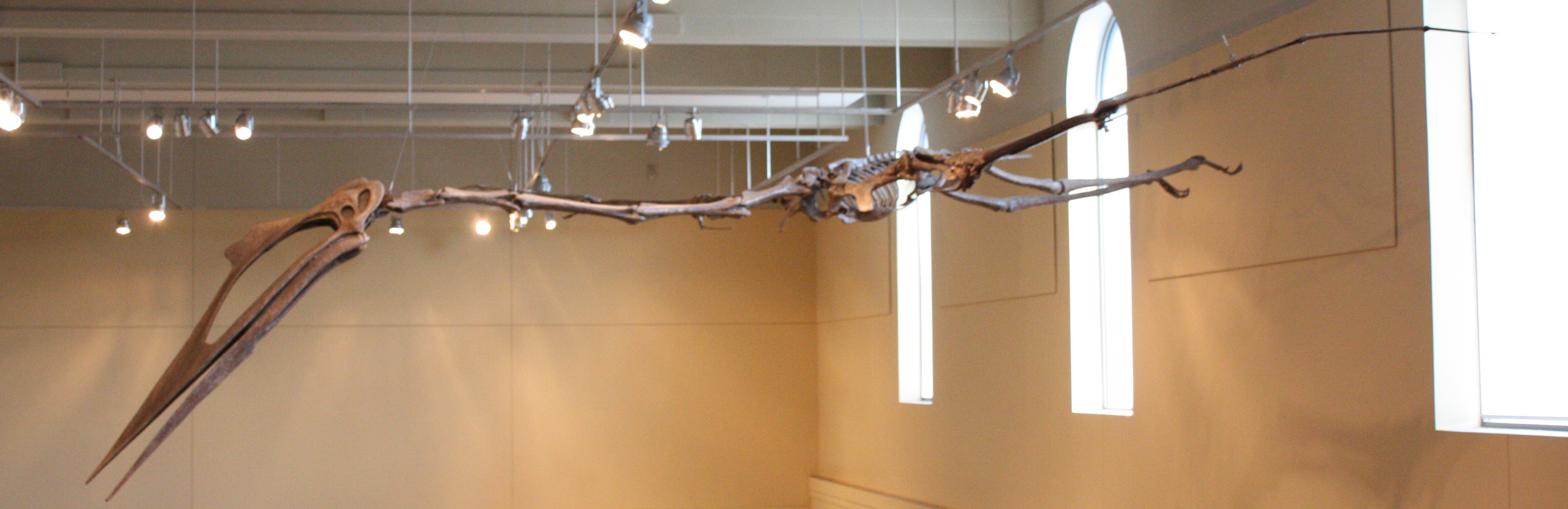
I. latidens is amongst the best known istiodactylids of all and was, for much of the 20th century, one of the only pterosaurs represented by substantial, uncrushed three-dimensional material. Of the various specimens referred to I. latidens, one is preferentially discussed far more than the others: NHMUK R3877. Represented by an almost complete skull (see below) and a good portion of postcranial material, this specimen is the material that most associate with the name I. latidens. NHMUK R3877 was collected in 1904 from Atherfield Point on the Isle of Wight, and subsequently described and illustrated in detail by Reginald Walter Hooley (1913), a dedicated ‘amateur’ palaeontologist who collected and described many important specimens of Cretaceous reptiles from the Isle of Wight. Pterosaur workers have added little detail to the picture of I. latidens since Hooley’s day and, aside from a little nomenclatural juggling in the 90s and 00s, the picture of I. latidens has remained unchanged since the 1913 description. Hooley’s picture of NHMUK R3877 has become very familiar thanks to its continual discussion in pterosaurian technical literature, be it for anatomical comparisons or for use in functional morphology. We also still use Hooley’s original bone dimension estimates for NHMUK R3877, of which there are many: though well-preserved, few bones are complete. This latter issue is the reason for the waters around I. latidens and NHMUK R3877 finally being unsettled after a century of stillness. (Image above is Stafford Howse's life reconstruction of I. latidens, primarily based on NHMUK R3877. From Howse et al. 2001)

Ripples in the pond
Last June I travelled up to the NHM with neonate palaeontologists Kirsty Morgan and Georgia Maclean-Henry with a goal of photographing NHMUK R3877 for my book. The skull was my main priority, as the two skull pieces of NHMUK R3877 show details of istiodactylid skulls fantastically. One block shows the elongate, delicately-built posterior region, and the other contains both jaw tips, complete with smiling, interlocking teeth. These remains do not articulate, as the middle region has long been considered missing or, perhaps, only represented by useless scraps of bone. Generally, around 300 mm has been thought missing from the mid-jaw region, giving I. latidens a long skull length of 560 mm (Hooley 1913). On our trip, I ended up riffling through the many drawers containing NHMUK 3877 more thoroughly than usual and, in the odds-and-sods drawer, containing some of the less impressive bits and pieces of the specimen, I stumbled across this:

You’re looking at the c. 140 mm length of maxilla and portion of mandible from NHMUK R3877, a rather unimpressive collection of bones representing the mid-jaw length of the skull and lower jaw. There are only a few features worthy of mention, being the groove extending along the medial surface of the maxilla and the very shallow depth of the same bone, which measures 6 – 7 mm along its length. I must admit to having been rather ignorant of this third skull piece in the past, but Hooley knew of it, identified it and even figured it (Hooley 1913, Pl. XXXVII, Fig. 4). Until perhaps fairly recently**, however, it was in a rather unprepared state and of considerably less interest than the other, sexier bits of the fossil. Interestingly, I’m not alone in my ignorance: this portion of the skull that has never been incorporated into a reconstruction of I. latidens skull (despite at least four efforts that I know of) and has not been mentioned, to my knowledge, since Hooley’s brief description of it in 1913. Because I’m basically a child with an irrepressible urge to articulate broken fossils bones where possible, it didn’t take long for me to start wondering if this broken bit of jaw would fit with either of the other skull pieces. The answer was almost certainly yes, to both of them: it seems that a bridging element to the two NHMUK R3877 skull pieces was there all along, but had simply been forgotten or ignored.

**I’m unsure of the exact date of preparation, but I recently noticed that a photograph in Wellnhofer’s (1991) pterosaur encyclopaedia shows the specimen in the unprepared state. There is no date provided for the photo, but it does suggest that the specimen was left not prepped for several decades following Hooley’s description.

It must be said that I didn’t take this idea lightly: I not only asked my colleagues and NHM curator (and Pterosaur.Net contributor) Lorna Steel for corroboration of the fit, but sought further reassurance from David Martill and three pterosaur-studying PhD students before I believed my own eyes. After all, there is 100 years of intellectual inertia around the length of the NHMUK R3877’s jaw, and I figured that others would have found some flaw with their close association. Turns out that there wasn’t: for whatever reason, people had simply not put the material back together. The fit, it must be said, is not pin-point perfect, but the dimensions of the broken regions, the position of the maxillary medial grove, and the displacement of the dentary from the upper jaw are very close matches. This suggests that we’re actually only missing millimetres of the NHMUK R3877 jaw, not almost 300 mm. If this is the case, then the length of jaw between the two large skull pieces is only half that supposed for the preceding century, so we may seriously need to seriously overhaul our impression of the I. latidens skull. But should we be so hasty? After all, Hooley was no fool, so perhaps we need to consider his ideas in greater depth before rejecting his proposed jaw length. Perhaps there are other interpretations about the fit of this third element we could also consider. For that, you'll have to come back for part 2...

References
  • Arbour, V. M. and Currie, P. J. 2010. An istiodactylid pterosaur from the Upper Cretaceous Nanaimo Group, Hornby Island, British Columbia, Canada. Canadian Journal of Earth Sciences, 48, 63-69.
  • Bakker, R. T. 1998. Dinosaur mid-life crisis: the Jurassic-Cretaceous transition in Wyoming and Colorado. S. G. Lucas, J. I. Kirkland, & J. W. Estep. (eds.) Lower and Middle Cretaceous Terrestrial Ecosystems, New Mexico Museum of Natural History and Science Bulletin, 14, 67-77.
  • Howse, S. C. B. and Milner, A. R. 1993. Ornithodesmus – a maniraptroan theropod dinosaur from the Lower Cretaceous of the Isle of Wight, England. Palaeontology, 36, 425-437.
  • Hooley, R. W. 1913. On the skeleton of Ornithodesmus latidens; an Ornithosaur from the Wealden Shales of Atherfield (Isle of Wight). Quarterly Journal of the Geological Society, 96, 372-422.
  • Howse, S. C. B., Milner, A. R. and Martill, D. M. 2001. Pterosaurs. In: Martill, D. M. and Naish, D. (eds.), Dinosaurs of the Isle of Wight, Palaeontological Association, Field Guide to Fossils 10, pp. 324-335.
  • Seeley, H. G. 1901. Dragons of the air. Meuthuen and Co., London, United Kingdom, 239 pp.
  • Wellnhofer, P. 1991. The Illustrated Encyclopaedia of Pterosaurs. Salamander Books Ltd., London. 192 pp.
  • Witton, M. P. 2012. New insights into the skull of Istiodactylus latidens (Ornithocheiroidea, Pterodactyloidea). PLoS ONE, 7, e33170.

Tuesday, March 20, 2012

Make your own Quetzalcoatlus!


Back in my stint at the Carnegie, I had a great chat to Mark Klingler about his palaeoart. Mark mentioned that years ago he had created a little 'build your own pterosaur' kit where you could print out a Quetzalcoatlus he had designed and stick it together. He was extremely generous in offering this to the Musings to go up for people to do themselves, but he needed to check the copyright issues and find the necessary files.

Mark got back to me the other day to tell me that unbeknown to him, the files were already online and available on the Carnegie's own website. So problem solved, you can get them whenever you want and make your own (small) giant pterosaur. Just go here and follow the instructions. Mark was cunning enough to make it so that it's a skeletal view on one side and a life reconstruction on the other!

So get building and enjoy. my great thanks to mark for his original generous offer and for tracking down his files. Sure it's easy enough to get them where they are, but even he didn't know, so I'm delighted to bring this to a wider audience and well done to the Carnegie too for making this freely available for kids (and palaeontologists).

Monday, March 19, 2012

Does Air Density Make a Difference?


This is essentially a cross-post from H2VP (with some additions)

One thing I have been asked with some regularity is whether or not a somewhat denser Mesozoic atmosphere, particularly in the Cretaceous (compared to the modern one), could explain the giant size of Late Cretaceous pterosaurs or large dinosaurs.  In short, the answer is: probably not.

There is a reasonably good body of information regarding atmospheric composition during the Mesozoic.  During the Cretaceous, both oxygen and carbon dioxide levels rose slightly, and the total atmospheric density would have been slightly greater as a result - but the difference would have been relatively mild for large vertebrates.

Here is an example of a paper published on the effects of Cretaceous oxygen concentrations on plants: http://jxb.oxfordjournals.org/content/52/357/801.full, and there is a manuscript examining the effect of paleoatmosphere conditions on insects: http://jeb.biologists.org/content/201/8/1043.full.pdf.  There is a relatively recent paper on the Late Cretaceous atmosphere and its potential relationship to mass extinction as well: http://jxb.oxfordjournals.org/content/52/357/801.full

As you can see, plants and insects probably felt the effects of slightly higher oxygen and carbon dioxide concentrations, and indeed the insects of the Cretaceous included some relatively large species, as would be expected.  A slight increase in atmospheric density would have relatively little impact on the maximum size of dinosaurs or pterosaurs, however, and there is not actually any need for an extreme explanation for their size, anyway - despite being larger than living animals with similar lifestyles, none of the giant dinosaurs exceeded the expected maximum size for a walking animal, and no pterosaurs exceeded the limits for biological flight.  Quite a few pterosaurs exceeded the estimated limit for continuous flapping flight in a vertebrate animal (limit is roughly 25-30 kg, give or take), but that only means that they could not flap continuously over long distances and would have switched to soaring flight for long trips; it does not forbid them from flying.

There are three reasons why changes in atmospheric conditions have greater impacts on insects than vertebrate flyers.  First, the tracheal system that insects use for respiration is highly sensitive to oxygen partial pressure.  Second, since insects are typically small, they are often highly reliant on unsteady aerodynamics, which are much more sensitive to air density than steady dynamics.  Finally, insects are almost purely aerobic flyers, while many vertebrates can utilize some degree of anaerobic power (in large flying vertebrates, anaerobic power dominates).  Using anaerobic flight muscle provides a very large burst of power, without using oxygen, after which the muscle quickly fatigues.  Large vertebrates can therefore flap for short bursts, followed by periods of gliding, even when oxygen levels are low.  This option is typically unavailable to insects.